01
You send the picture
A JPEG or PNG of the scan, a screenshot from the patient portal, or a photo of the film on the lightbox. Patients and clinics can both upload.
LaymanReport reads medical images — X-rays, MRIs, CTs, ultrasounds, pathology slides, even a photo of the printout — then explains what it sees in everyday language, with a narrated video over your actual picture.

Radiology reports are written for other clinicians. You deserve the same information in a voice that doesn’t assume you went to medical school.
A JPEG or PNG of the scan, a screenshot from the patient portal, or a photo of the film on the lightbox. Patients and clinics can both upload.
The model looks at the image in high detail, writes a clinical impression, then translates every term into plain English with analogies you can hold onto.
A natural voice explains the findings over your scan — zooming, pointing, and pausing — so you can watch it, replay it, and take it to your next appointment.
After a scan, most people leave with a PDF they cannot parse and a follow-up weeks away. LaymanReport sits in that gap: it does not replace the official read. It makes the official read — or a careful second pass at the image — understandable.
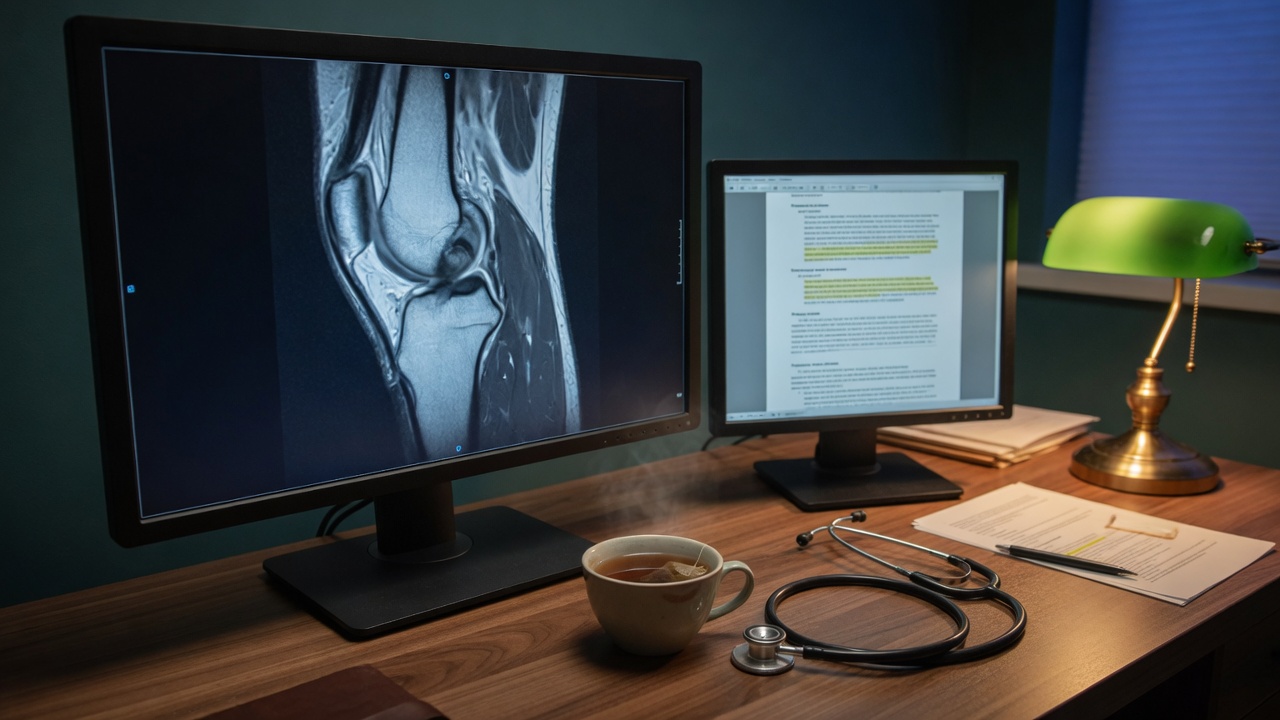
The same finding, twice: once for the chart, once for a human being.
“Mild cardiomegaly with a cardiothoracic ratio of approximately 0.55. No focal consolidation. Costophrenic angles are sharp.”
“Your heart looks a little larger than the usual postcard-size on this picture — like a pump sitting in a slightly snug box. The lungs themselves look clear, and the corners where they meet the diaphragm are crisp, which is what we want to see.”
LaymanReport is an educational second look. It is not a medical device, not a diagnosis, and not a substitute for a licensed clinician who knows your history. If you think something is an emergency, go to emergency care — don’t wait on a website.
Images are sent for this reading only. We do not store them as a patient archive.
If the picture is unclear, the report says so. Inventing findings is worse than saying “I can’t tell.”
Take the video and the written translation to the person who can examine you and compare priors.
Upload a scan. Get a reading you can replay, pause, and actually follow.
Start a readingPatient mode: a second look in plain English, with a narrated walk-through.
After an imaging visit, most people nod, drive home, and Google the words they half-heard. Give them a narrated walk-through of their own scan instead — generated from the image you already have, in language a family member can sit through.
Keep the clinical impression for the chart. Hand the patient the plain-English video and glossary.
Upload the study or a key screenshot. Review. Send. No new workstation, no dictation queue.
The video is a translation aid. The signed report and the treating clinician still decide next steps.
LaymanReport is built so a scan can be understood without becoming a new copy of your medical record.
When you upload an image, it is sent to our server for that request and then to the analysis and speech models that produce the report and narration. We do not operate a patient archive. Images are not kept as a library of scans after the response is returned.
Avoid names, dates of birth, medical record numbers, and faces when you can. Crop them out of portal screenshots. The model is instructed not to repeat identifiers, but the safest upload is one that never included them.
This public site is not a covered entity’s designated record set and is not offered under a Business Associate Agreement unless we have signed one with your organization. Do not use it as a hospital’s official imaging archive.
Questions: privacy@laymanreport.com
By using LaymanReport you agree to the following.
Outputs are informational. They are not medical advice, a diagnosis, a prescribed treatment, or a signed radiology, pathology, or clinical report. Always review findings with a licensed clinician who can examine you and compare prior studies.
If you think you may be having a medical emergency, call local emergency services. Do not wait for an AI reading.
The service may misread an image, miss a finding, or overstate one. Image quality, missing series, and lack of clinical context all limit accuracy. You use the service as-is.
You represent that you have the right to upload the image (it is yours, you are the patient, or you are a clinician/staff member authorized to create a patient-facing explanation).